The Surprise by Vivien Pastiof

This February, Vivien Pastiof reported back – at least with some written lines on a postcard. Many will remember her from theAlternate Reality Game Final Mill, which went live a year ago in February. After the ARG was over, she went away to get over and recover from all the past events that had happend throughout the Alternate Reality Game. Therefore she went to a secret place somewhere on the other side of the earth to recover in secrecy.

Everybody was happy to hear from her, especially the ones that had gotten her postcard with the „Sunny greetings!“ on it at the beginning of the year.

In addition to those greetings, Vivien was happy to hand over two surprises to the recipients. One of those surprises was theSunny Side of the Lane. The other one was waiting for the players at the end of that lane.

The Sunny Side of the Lane is a puzzle-trail where you have to solve a puzzle in order to get to the next one. The puzzles will be taken from all levels of difficulty so there will be easier ones and some of them are really hard even though sometimes the solution is right in front of you.

The puzzles of the Sunny of the Side Lane will have links to the story of the Final Mill ARG, but that doesn’t mean that you have to have played the ARG to be able to solve all the puzzles. Quite the opposite is the case. While solving the puzzles you’ll get some impressions of what the Final Mill ARG was like. And you can dig deeper into these impressions, when you will have a look into the Player-Wiki or the ARG-Reporter Forum. Both were kept up to date by the players.

While some of the puzzles are easier than others, there may be a few of them where you seem to be unable to move on. In that case you may want to contact other players at the ARG-Reporter-Forum, where nobody wants to spoil you but everybody is really helpful. All puzzles are currently available in German only and we don’t know whether that will be changed or not.

If you made it through all of the puzzles, Vivien is waiting for you at the final stage. She has the second surprise for you in form of a Download-Link. We are not going to tell you, what is waiting for you behind the download, since it shall stay a surprise 😉 The only thing is, that it is of course in German (like to players recources, too).

Our tip: Take it with you to the beach and listen to it there.

Die Überraschung der Vivien Pastiof

In diesem Februar meldete sich Vivien Pastiof zurück – zumindest in Form einer Postkarte. Viele kannten sie bereits aus demAlternate Reality Game Final Mill, welches ein Jahr zuvor im gleichen Monat begonnen hatte. Damals war sie nach den ganzen Ereignissen erst einmal untergetaucht um sich an einen geheimen Ort zurückzuziehen und zu neuen Kräften zu kommen.

Als sie sich dann Anfang diesen Jahres mit sonnigen Urlaubsgrüßen meldete, waren nicht nur enige der damaligen Teilnehmer erfreut zu lesen, dass es ihr gut ging. Es waren auch neue, interessierte ARG-Spieler hinzugekommen, die damals nur von Final Mill gelesen hatten oder die sogar noch gar nicht mit dem ARG in Kontakt gekommen waren.

Vivien hatte neben ihren Grüßen noch zwei weitere Überraschungen vorbereitet. Die Sunny Side of the Lane und das, was am Ende dieser Straße auf die Teilnehmer wartete.

Bei der Sunny Side of the Lane handelt es sich um einen Rätselpfad. Das besondere daran ist, dass man immer erst ein Rätsel lösen muss, um zum nächsten zu gelangen. Der Schwierigkeitsgrad der Rätsel kann dabei stets variieren wobei die Lösung manchmal schon direkt vor einem liegt.

Auch bei der Sunny of the Side Lane gelangt man von einem Rätsel zum nächsten. Dabei bauen die Rätsel nicht zwingend thematisch aufeinander auf, aber sie sind in jedem Fall immer im thematischen Zusammenhang mit der Story von Final Mill zu sehen. Das muss allerdings nicht bedeuten, dass man den Rätselpfad nicht lösen kann, wenn man damals bei Final Mill nicht dabei war. Ganz im Gegenteil: Durch die Rätsel erlangt man einige Eindrücke zu dem damaligen ARG. Wer diese Eindrücke noch mehr vertiefen möchte, der kann das entweder über das Spielerwiki oder das Forum machen, denn beide wurden von den Spielern während des Final-Mill-ARGs angelegt und gepflegt.

Wie bereits erwähnt, sind einige der Rätsel auf der Sunny Side of the Lane schwerer als andere. Wer gar nicht weiterkommt, der kann im ARG-Reporter-Forumdie anderen ja mal nach einem Tipp fragen, die helfen ganz bestimmt. Aber wenn man sich erst einmal durchgebissen hat, dann wartet Vivien Pastiof mit einer Überraschung auf, denn auf der finalen Seite des Rätselpfades stellt sie einen Download-Link zur Verfügung. Über den Link kann man sich die Hör-Überraschung schließlich herunterladen, nach den harten Kopfnüssen entspannt zurücklehnen und lauschen.

Kleiner Tipp der Redaktion: Lauscht die Überraschung im Urlaub am Strand 😉

Webseiten:


15 Questions to Ken Eklund

It’s time again for a 15-Questions-Interview.

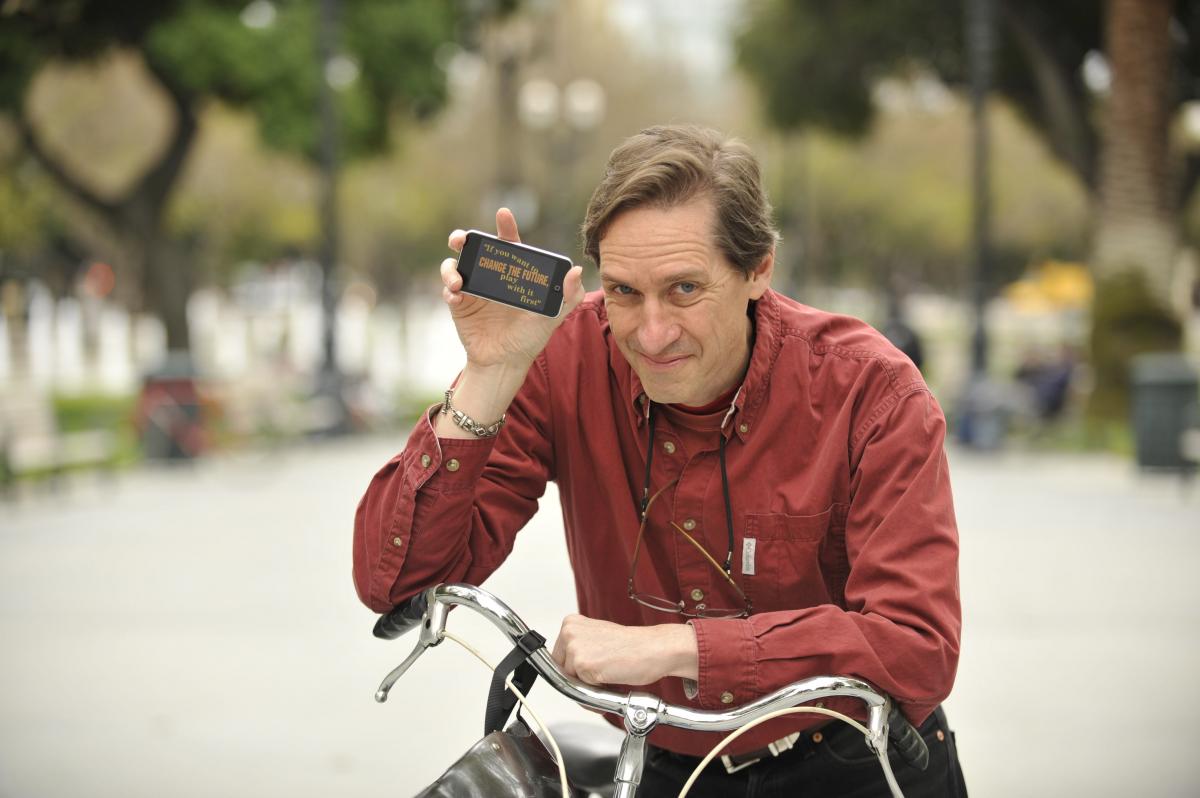
This time we asked Ken Eklund to answer our questions. He is well known for his work on World Without Oil and Ruby’s Bequest and some other ARGs of course. Especially with these two he and the other puppetmasters invented a new type of Alternate Reality Game called Serious ARGs. These kind of ARGs try to concern on real world problems and topics like running out of oil and they try to find solutions to those problems.

You can find some of his latest projects at his website, which goes by the name Writerguy.com.


1) About when and how did you get in touch with ARGs?
It was in early 2005, I think. I was working with a friend to develop this idea we had for this game where the story was scattered all around the Internet, as a benefit for the San Francisco Library. I was surfing the Internet that morning and stumbled upon I LOVE BEES. I called up my friend and said, “This idea has a name! It’s an alternate reality game.”

2) Did you take part in some ARGs as a player, too? Which?

Too many to list. THE LOST RING, SUPERSTRUCT, LAST CALL POKER, JAMIE KANE, TRACES OF HOPE are the ones that spring to mind… Followed many others: GHOSTS OF A CHANCE, for example, which I had a part in creating.

3) In which ARGs have you been Puppetmaster/BHTS and what was your job in those?

Two puppetmastering gigs so far: RUBY’S BEQUEST and WORLD WITHOUT OIL. In both cases I designed and ran the game – uberpuppetmeister, if you will. I have also had a Behind The Curtain role helping develop game concepts, for GHOSTS OF A CHANCE for example, and sharing game information for serious ARGs such as CORAL CROSS.

4) Which ARG do you like best and why?
WORLD WITHOUT OIL, definitely. It was a groundbreaking serious ARG, a true game for change. As the designer, it was simply thrilling to see people engage with it as I hoped and dreamed they would, and then beyond that in ways I never really expected.

It was also thrilling because the game continually surprised me, at every level. Every waking hour while it was going on, there was some clever or honest or astonishing thing created by a player, or by one of our gamemasters (who operated very autonomously), or some astute observation about the game appeared in the press and blogosphere. When articles about the game appeared in Le Monde and Der Spiegel, that was a high point, certainly.


5) Which was the funniest/nicest happening while doing/playing an ARG?
That’s a hard question, because funny and nice things happen all the time in ARGs. Their “pronoia” (opposite of paranoia) is one of the coolest aspects to them.

My most recent game, RUBY’S BEQUEST, was an ARG that explored caring, so it’s pretty much filled with caring moments front to back, some of them quite amazing and cathartic. Institute For The Future, my client, is doing follow-up surveys right now, and uncovering some marvelous player stories. For some of the players, RUBY’S BEQUEST was the best game they had ever experienced, because it was about something real.

A funny moment? One came in RUBY’S BEQUEST when a player asked us for a mailing address – she wanted to send a card to one of our characters – except that all our characters live in the entirely fictitious town of Deepwell USA! Too bad we couldn’t arrange to get all mail to “Deepwell USA” routed to us, as Santa Claus has done with mail to the North Pole.


6) Are there any memories to happenings that you wanted to forget about?
Certainly. Most of them I HAVE forgotten about. One I do remember had to do with a player that got behind the curtain early on in WORLD WITHOUT OIL. And we kinda freaked out. In retrospect I think the player got there pretty innocently and thus we really overreacted. So we ended up alienating a good player for no good reason and I still feel sorry about that. I’ve since learned to trust my players.

7) How do you explain ARGs to your family / friends / relatives and how do they react?
I think ARGs are easier to play than they are to define. I am lucky in that the kind of ARGs I do, massively collaborative ones like WORLD WITHOUT OIL, are relatively easy to explain. “You run across this website that believes the next oil crisis has begun. It shows you how the price of oil is skyrocketing and shortages are beginning. It wants to know how these developments have impacted your life and what you personally are doing to cope.” That’s really all that most people need to get started.

If necessary, you can continue: “It’s collecting all the citizen reports and linking to them. So you can click on what other people are saying; you find a gal in Toronto Canada, for example, talking about hoarding and a guy in Bristol UK talking about a fistfight that broke out in the petrol queue. And that leads you to imagine what actually would be happening on your street and in your life if a global oil crisis really had started. And you write it up or phone it in or maybe make a video, and then WORLD WITHOUT OIL links to it too.”

The part that’s hard to explain, though, is that these massively collaborative games are more than just a collection of stories, in the same way that I LOVE BEES was more than just a science fiction story. The way in which you help assemble it heightens the experience. In WORLD WITHOUT OIL the citizen stories wove together and built on each other in a really remarkable way.

How do people react? Usually there are these stages: first, hunh? Then, what?? Then, tell me more. Then, does that mean that….??? And finally, fascination.

8) Which 3 things does an ARG really need to have, to be a good ARG in your opinion?
The three things that to me make an ARG work: it has to have an alternate reality, there has to be gameplay, and it has to be fun. You probably are saying, “Well, duh!” but the key here is defining what these terms actually mean.

First: the alternate reality. I define “alternate reality” in this context as a fictive scenario that’s got plausibility and internal coherence. “Plausibility” is hard to explain exactly; it has to do with being unflinchingly honest with the concept. Take space aliens as an example: almost all the space aliens we see in modern entertainment are constructed to be entertaining, not honest attempts to imagine what aliens might actually be like. Similarly, “internal coherence” is being honest and real with your story and characters and using that honesty to make the experience richer. Blade Runner and Children of Men are examples of movies with internal coherence. ARGs lose internal coherence when the puzzles are clearly gamemaster constructs, for example.

The second thing an ARG must have: gameplay. I focus here on the verb “play” rather than the noun “game”: that is, are you the player playing at something? How much room is there for you to figure out your own way to achieve the game goal, the way you can in chess or basketball? ARGs rate low in gameplay, in my book, if players follow a rote path to unlock a bit of canned story.

The third thing an ARG must have: it must be fun. “Fun” to me goes beyond the usual experience of a pleasant pastime or diversion – it must have true life value. So winning 10 levels in BEJEWELLED or finding a dead drop is fun but not as much fun as forming intense friendships in your WoW guild, or gaining a real sense of the power of collective intelligence in I LOVE BEES, or getting your worldview challenged in WORLD WITHOUT OIL. Many ARGs score well in this area: people remember them vividly years later, still have friendships with fellow players, are still applying life skills they never knew they had until the game called them forth, still look back on their accomplishments with pride, and so on.

For myself ARGs must have a fourth thing: relevance. They must put you the player in touch with something that is actually meaningful to you and to the society you’re part of. I guess another way to say this is they should aspire to be something like art.

9) Do you have a favourite character from an ARG?
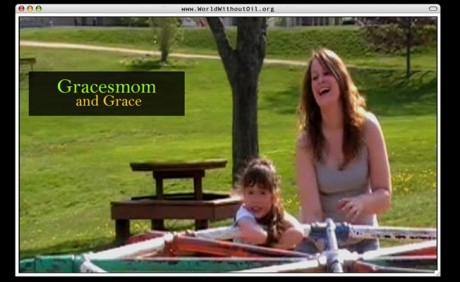
Oh yes: Gracesmom, a young single mother in New Hampshire, brilliantly played by Gupfee, aka Marie Lamb, in WORLD WITHOUT OIL. Marie says that she was channeling people she knows in real life, and Gracesmom certainly had that well-imagined authenticity, but mostly, the way that Marie played her, she was just someone you wanted to be with. As a young single mom, Gracesmom was vulnerable to the worst that the oil shock had to offer, and as the wolves of deprivation came sniffing around her door, her brave and resourceful response to her vulnerabilities brought out the best in our players.

10) What are you currently working on? (if you may tell us/are allowed to tell us 😉 )
WORLD WITHOUT OIL really opened the door for games that address serious real-world issues. So I have people coming to me with fascinating ideas and challenges: what about a game about climate change? Water crisis? Food production? Immigration problems? Can a game help people refine their personal mythologies about hate and forgiveness? About immigrants and citizenship? About health and self-esteem? About freedom? About creativity and community? This is just so unbelievably cool, I can hardly stand it sometimes. RUBY’S BEQUEST is the first of these games to get funded, but others are underway.

I’m getting pings from corporations too along these same lines. There seems to be movement toward “serious promotions”  – entertainment ARGs that also engage with civic issues. For example: a fun and funny ARG features a fuel-efficient car – AND a public dialog about responsible consumption. Or inquiries about how a brand can mobilize its fans to lead in a socially relevant cause such as democracy advocacy or rainforest preservation.

In between these conversations, I’m pursuing interests of my own. I’d really like to do a game for teachers; I’m in some great dialogs with museums; I’m in some fascinating dialogs with theater people and film people. All of us see increased interactivity and participation as an imperative and social networking as a tremendous opportunity. Jane McGonigal speaks eloquently these days about how “happiness engineers” need to keep connecting games with real-world issues, and that’s just what I’m doing every day.

11) Which puzzle from past ARGs do you like best/was real fun? Can you tell us why?
JAMIE KANE had a very neat puzzle where you had gained remote access to a villain’s computer and thus could order it to upload a secret file to your allies’ server. The only problem was, the villain was actively using the computer at the time. So you had to watch the computer’s webcam stream and select a moment when the villain would be distracted long enough for you to upload the file – if she saw the upload happen and canceled it everything would be ruined.

So here I am, watching a completely boring vid of a woman reading her email, petting her cat and sipping her tea – with my finger poised over the INITIATE DOWNLOAD button and sweating bullets the whole time! It was a fabulous example of how a puzzle can be entirely in-game and plausible, and gain drama by doing so.

12) Do you have something like a „phrase“/“objective“ which you follow while organizing and running an ARG?
Not really. Each one is pretty much built from the ground up with a certain audience, gameplay and goal in mind. I do have certain rules of thumb: “What really WOULD happen?” “What WOULD the character do?” – if the ARG fiction were true. And: “That player has a great idea. How can we embrace it?”

13) Do you remember a situation in which you wanted to give up on anything? What happened?
This situation doesn’t happen in crowd-sourced ARGs. In WORLD WITHOUT OIL and RUBY’S BEQUEST, the players really drove the story. So you never reach a point where the players are diverging from the story – they’re creating it!

14) Was there something like a favourite item from an ARG that you didn’t want to give away, but you had to, because the IG-Character had to?

Nothing material. But there were moments all during WORLD WITHOUT OIL when it was tempting to Hollywoodize the story, to make it more like a dramatic movie. But WORLD WITHOUT OIL was not a movie and our characters were not driving the story – the players were. The characters’ job was to be authentic, to help the players be authentic too. So every day we passed up on “dramatic” storylines in favor of authentic ones, and thank heavens we did.

15) How do you see the future of ARGs?
Regarding commercial ARGs, would you as a consumer rather see a company spend a million dollars developing a Super Bowl ad or a great ARG? As more and more people prefer ARGs, more and more of them are going to be made.

The ARG future that I’m very connected to, and excited about, is how ARGs and ARG-style collaborative play are moving into other areas – areas such as culture and civics and politics and science and education and health and economies and ecology. ARGs can revolutionize how people experience these issues and also how they resolve them. We have this fabulous resource in that we have so many people with good ideas and good energy to apply them, and I see ARGs as the perfect way to get people to connect and create, to express those ideas and that energy in positive, meaningful ways. And to have a blast doing it!


Thank you very much for taking the time and answer our 15 Questions, Ken. We are curious about your next ARG-projects.


15 Fragen an Ken Eklund

Es ist mal wieder Zeit für ein 15-Questions-Interview.

Dieses mal haben wir Ken Eklund gebeten unsere Fragen zu beantworten. Man kennt ihn bereits durch die Projekte World Without Oil oder Ruby’s Bequest und natürlich einigen anderen, an denen er mitgewirkt hat. Besonders mit diese beiden ist es ihm und dem Puppetmasterteam gelungen, eine neue Art der Alternate Reality Games zu etablieren, den sogenannten Serious ARGs. Bei diesen ARGs dreht es sich hauptsächlich darum, Themen und Probleme aus der realen Welt zu behandeln, wie zum Beispiel ein Leben ohne Öl aussehen könnte, welche Alternativen es zum Öl gibt und auf diese Probleme und Fragen Antworten zu finden.

Auf seiner Website Writerguy.com stellt er unter anderem eine Übersicht seiner letzten Projekte dar.

1) About when and how did you get in touch with ARGs?
It was in early 2005, I think. I was working with a friend to develop this idea we had for this game where the story was scattered all around the Internet, as a benefit for the San Francisco Library. I was surfing the Internet that morning and stumbled upon I LOVE BEES. I called up my friend and said, “This idea has a name! It’s an alternate reality game.”

2) Did you take part in some ARGs as a player, too? Which?

Too many to list. THE LOST RING, SUPERSTRUCT, LAST CALL POKER, JAMIE KANE, TRACES OF HOPE are the ones that spring to mind… Followed many others: GHOSTS OF A CHANCE, for example, which I had a part in creating.

3) In which ARGs have you been Puppetmaster/BHTS and what was your job in those?

Two puppetmastering gigs so far: RUBY’S BEQUEST and WORLD WITHOUT OIL. In both cases I designed and ran the game – uberpuppetmeister, if you will. I have also had a Behind The Curtain role helping develop game concepts, for GHOSTS OF A CHANCE for example, and sharing game information for serious ARGs such as CORAL CROSS.

4) Which ARG do you like best and why?
WORLD WITHOUT OIL, definitely. It was a groundbreaking serious ARG, a true game for change. As the designer, it was simply thrilling to see people engage with it as I hoped and dreamed they would, and then beyond that in ways I never really expected.

It was also thrilling because the game continually surprised me, at every level. Every waking hour while it was going on, there was some clever or honest or astonishing thing created by a player, or by one of our gamemasters (who operated very autonomously), or some astute observation about the game appeared in the press and blogosphere. When articles about the game appeared in Le Monde and Der Spiegel, that was a high point, certainly.


5) Which was the funniest/nicest happening while doing/playing an ARG?

That’s a hard question, because funny and nice things happen all the time in ARGs. Their “pronoia” (opposite of paranoia) is one of the coolest aspects to them.

My most recent game, RUBY’S BEQUEST, was an ARG that explored caring, so it’s pretty much filled with caring moments front to back, some of them quite amazing and cathartic. Institute For The Future, my client, is doing follow-up surveys right now, and uncovering some marvelous player stories. For some of the players, RUBY’S BEQUEST was the best game they had ever experienced, because it was about something real.

A funny moment? One came in RUBY’S BEQUEST when a player asked us for a mailing address – she wanted to send a card to one of our characters – except that all our characters live in the entirely fictitious town of Deepwell USA! Too bad we couldn’t arrange to get all mail to “Deepwell USA” routed to us, as Santa Claus has done with mail to the North Pole.


6) Are there any memories to happenings that you wanted to forget about?
Certainly. Most of them I HAVE forgotten about. One I do remember had to do with a player that got behind the curtain early on in WORLD WITHOUT OIL. And we kinda freaked out. In retrospect I think the player got there pretty innocently and thus we really overreacted. So we ended up alienating a good player for no good reason and I still feel sorry about that. I’ve since learned to trust my players.

7) How do you explain ARGs to your family / friends / relatives and how do they react?
I think ARGs are easier to play than they are to define. I am lucky in that the kind of ARGs I do, massively collaborative ones like WORLD WITHOUT OIL, are relatively easy to explain. “You run across this website that believes the next oil crisis has begun. It shows you how the price of oil is skyrocketing and shortages are beginning. It wants to know how these developments have impacted your life and what you personally are doing to cope.” That’s really all that most people need to get started.

If necessary, you can continue: “It’s collecting all the citizen reports and linking to them. So you can click on what other people are saying; you find a gal in Toronto Canada, for example, talking about hoarding and a guy in Bristol UK talking about a fistfight that broke out in the petrol queue. And that leads you to imagine what actually would be happening on your street and in your life if a global oil crisis really had started. And you write it up or phone it in or maybe make a video, and then WORLD WITHOUT OIL links to it too.”

The part that’s hard to explain, though, is that these massively collaborative games are more than just a collection of stories, in the same way that I LOVE BEES was more than just a science fiction story. The way in which you help assemble it heightens the experience. In WORLD WITHOUT OIL the citizen stories wove together and built on each other in a really remarkable way.

How do people react? Usually there are these stages: first, hunh? Then, what?? Then, tell me more. Then, does that mean that….??? And finally, fascination.

8) Which 3 things does an ARG really need to have, to be a good ARG in your opinion?
The three things that to me make an ARG work: it has to have an alternate reality, there has to be gameplay, and it has to be fun. You probably are saying, “Well, duh!” but the key here is defining what these terms actually mean.

First: the alternate reality. I define “alternate reality” in this context as a fictive scenario that’s got plausibility and internal coherence. “Plausibility” is hard to explain exactly; it has to do with being unflinchingly honest with the concept. Take space aliens as an example: almost all the space aliens we see in modern entertainment are constructed to be entertaining, not honest attempts to imagine what aliens might actually be like. Similarly, “internal coherence” is being honest and real with your story and characters and using that honesty to make the experience richer. Blade Runner and Children of Men are examples of movies with internal coherence. ARGs lose internal coherence when the puzzles are clearly gamemaster constructs, for example.

The second thing an ARG must have: gameplay. I focus here on the verb “play” rather than the noun “game”: that is, are you the player playing at something? How much room is there for you to figure out your own way to achieve the game goal, the way you can in chess or basketball? ARGs rate low in gameplay, in my book, if players follow a rote path to unlock a bit of canned story.

The third thing an ARG must have: it must be fun. “Fun” to me goes beyond the usual experience of a pleasant pastime or diversion – it must have true life value. So winning 10 levels in BEJEWELLED or finding a dead drop is fun but not as much fun as forming intense friendships in your WoW guild, or gaining a real sense of the power of collective intelligence in I LOVE BEES, or getting your worldview challenged in WORLD WITHOUT OIL. Many ARGs score well in this area: people remember them vividly years later, still have friendships with fellow players, are still applying life skills they never knew they had until the game called them forth, still look back on their accomplishments with pride, and so on.

For myself ARGs must have a fourth thing: relevance. They must put you the player in touch with something that is actually meaningful to you and to the society you’re part of. I guess another way to say this is they should aspire to be something like art.

9) Do you have a favourite character from an ARG?
Oh yes: Gracesmom, a young single mother in New Hampshire, brilliantly played by Gupfee, aka Marie Lamb, in WORLD WITHOUT OIL. Marie says that she was channeling people she knows in real life, and Gracesmom certainly had that well-imagined authenticity, but mostly, the way that Marie played her, she was just someone you wanted to be with. As a young single mom, Gracesmom was vulnerable to the worst that the oil shock had to offer, and as the wolves of deprivation came sniffing around her door, her brave and resourceful response to her vulnerabilities brought out the best in our players.


10) What are you currently working on? (if you may tell us/are allowed to tell us 😉 )
WORLD WITHOUT OIL really opened the door for games that address serious real-world issues. So I have people coming to me with fascinating ideas and challenges: what about a game about climate change? Water crisis? Food production? Immigration problems? Can a game help people refine their personal mythologies about hate and forgiveness? About immigrants and citizenship? About health and self-esteem? About freedom? About creativity and community? This is just so unbelievably cool, I can hardly stand it sometimes. RUBY’S BEQUEST is the first of these games to get funded, but others are underway.

I’m getting pings from corporations too along these same lines. There seems to be movement toward “serious promotions”  – entertainment ARGs that also engage with civic issues. For example: a fun and funny ARG features a fuel-efficient car – AND a public dialog about responsible consumption. Or inquiries about how a brand can mobilize its fans to lead in a socially relevant cause such as democracy advocacy or rainforest preservation.

In between these conversations, I’m pursuing interests of my own. I’d really like to do a game for teachers; I’m in some great dialogs with museums; I’m in some fascinating dialogs with theater people and film people. All of us see increased interactivity and participation as an imperative and social networking as a tremendous opportunity. Jane McGonigal speaks eloquently these days about how “happiness engineers” need to keep connecting games with real-world issues, and that’s just what I’m doing every day.

11) Which puzzle from past ARGs do you like best/was real fun? Can you tell us why?
JAMIE KANE had a very neat puzzle where you had gained remote access to a villain’s computer and thus could order it to upload a secret file to your allies’ server. The only problem was, the villain was actively using the computer at the time. So you had to watch the computer’s webcam stream and select a moment when the villain would be distracted long enough for you to upload the file – if she saw the upload happen and canceled it everything would be ruined.

So here I am, watching a completely boring vid of a woman reading her email, petting her cat and sipping her tea – with my finger poised over the INITIATE DOWNLOAD button and sweating bullets the whole time! It was a fabulous example of how a puzzle can be entirely in-game and plausible, and gain drama by doing so.

12) Do you have something like a „phrase“/“objective“ which you follow while organizing and running an ARG?
Not really. Each one is pretty much built from the ground up with a certain audience, gameplay and goal in mind. I do have certain rules of thumb: “What really WOULD happen?” “What WOULD the character do?” – if the ARG fiction were true. And: “That player has a great idea. How can we embrace it?”

13) Do you remember a situation in which you wanted to give up on anything? What happened?
This situation doesn’t happen in crowd-sourced ARGs. In WORLD WITHOUT OIL and RUBY’S BEQUEST, the players really drove the story. So you never reach a point where the players are diverging from the story – they’re creating it!

14) Was there something like a favourite item from an ARG that you didn’t want to give away, but you had to, because the IG-Character had to?

Nothing material. But there were moments all during WORLD WITHOUT OIL when it was tempting to Hollywoodize the story, to make it more like a dramatic movie. But WORLD WITHOUT OIL was not a movie and our characters were not driving the story – the players were. The characters’ job was to be authentic, to help the players be authentic too. So every day we passed up on “dramatic” storylines in favor of authentic ones, and thank heavens we did.

15) How do you see the future of ARGs?
Regarding commercial ARGs, would you as a consumer rather see a company spend a million dollars developing a Super Bowl ad or a great ARG? As more and more people prefer ARGs, more and more of them are going to be made.

The ARG future that I’m very connected to, and excited about, is how ARGs and ARG-style collaborative play are moving into other areas – areas such as culture and civics and politics and science and education and health and economies and ecology. ARGs can revolutionize how people experience these issues and also how they resolve them. We have this fabulous resource in that we have so many people with good ideas and good energy to apply them, and I see ARGs as the perfect way to get people to connect and create, to express those ideas and that energy in positive, meaningful ways. And to have a blast doing it!


Vielen Dank, dass du dir die Zeit genommen hast unsere Fragen zu beantworten, Ken. Wir sind schon ganz gespannt auf deine nächsten ARG-Projekte.


Moving to a new server

We are currently moving to a new server and we will give you more infos, as soon as we have done all things about that. In the meantime you can still find all the contents of our Website here.

Fotonachweis: CC Reverend Aviator (@Flickr)

Server Umzug

Zur Zeit befinden wir uns in der heißen Phase eines Serverumzugs.

Mehr Infos, sobald alles wieder online ist und reibungslos funktioniert. Die alten Inhalte können in der Zwischenzeit hier eingesehen werden.